Enterprise Analytical SaaS
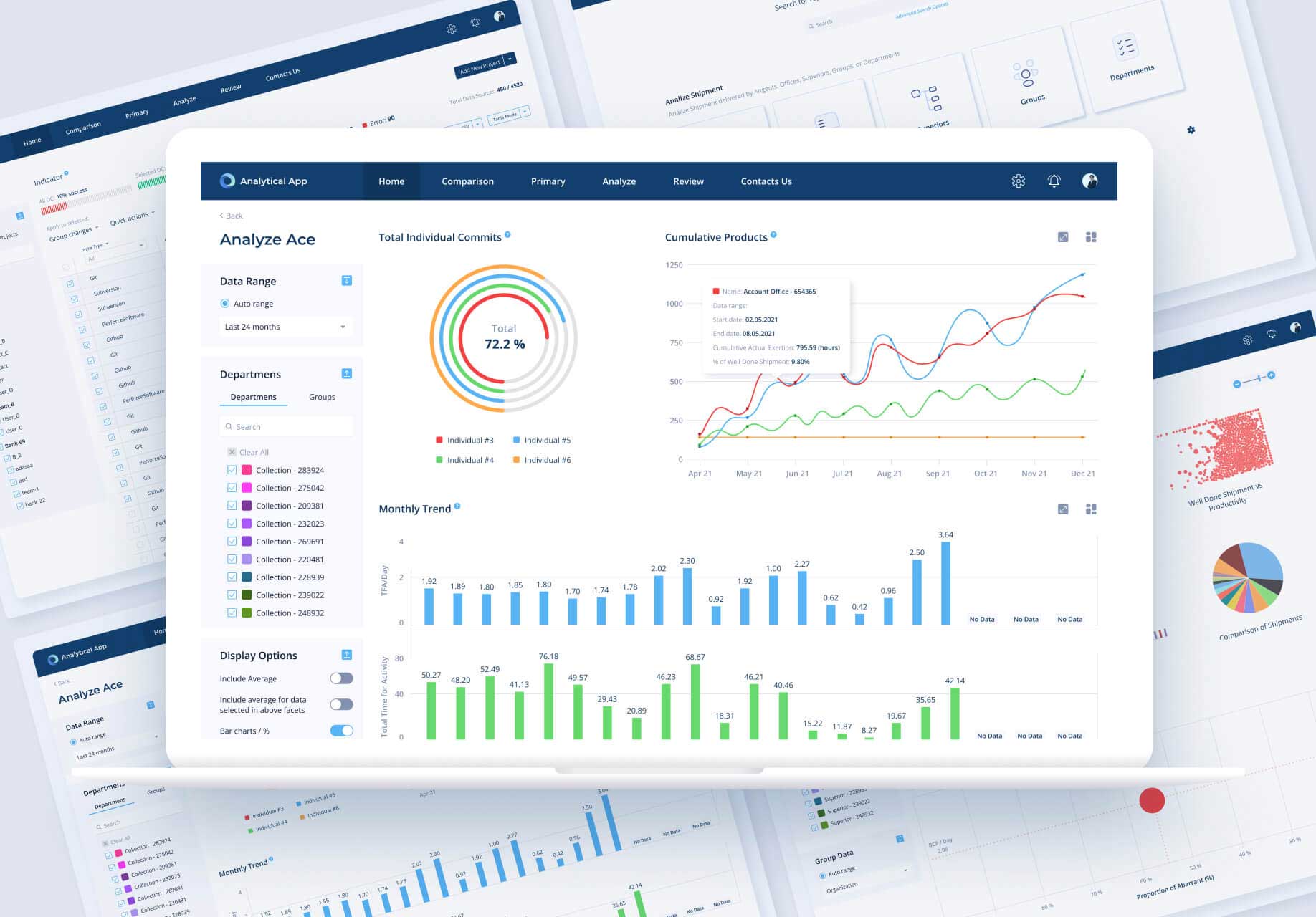
DeepInspire helped a UK software company build and grow its analytical SaaS product, empowering enterprises with reliable and objective insights on the productivity of their development teams.
Technologies:
AngularJS, Grunt, SoapUI, Highcharts, REST API
About the client
Our client is a UK-based enterprise SaaS company providing analytics solutions for large global organizations. Their platform helps technology and operations leaders measure team performance, identify inefficiencies, and drive continuous improvement across complex software delivery processes.
The solution is used by thousands of professionals worldwide to analyze high-volume data, benchmark productivity across teams, and make data-driven decisions that improve quality, efficiency, and return on investment.
Location:
United KingdomDomain:
Enterprise SaaS, Data AnalyticsContent
- 01Challenges
- 02Our Solutions
- 03Outcomes


Our Solutions
Our goal was to help the client scale their analytics platform without compromising speed or usability. Our team – including UX/UI designers, front-end developers, and a project manager – worked closely with the client to enhance both the user experience and system performance.
Let’s explore our main solutions in more detail:
Complex data structure
Problem
The platform worked with a large, interconnected data structure that included hundreds of thousands of elements linked together. When a user selected one element, it affected many others, which made the system heavy and slowed down responses.
Solution
We used a lightweight local database to move most operations related to this structure to the client side. This reduced the load on the server and made the app much faster. While the client’s backend team focused on processing large volumes of statistical data, our front-end team improved the UI logic to ensure everything ran smoothly.
Long lists & huge tables
Problem
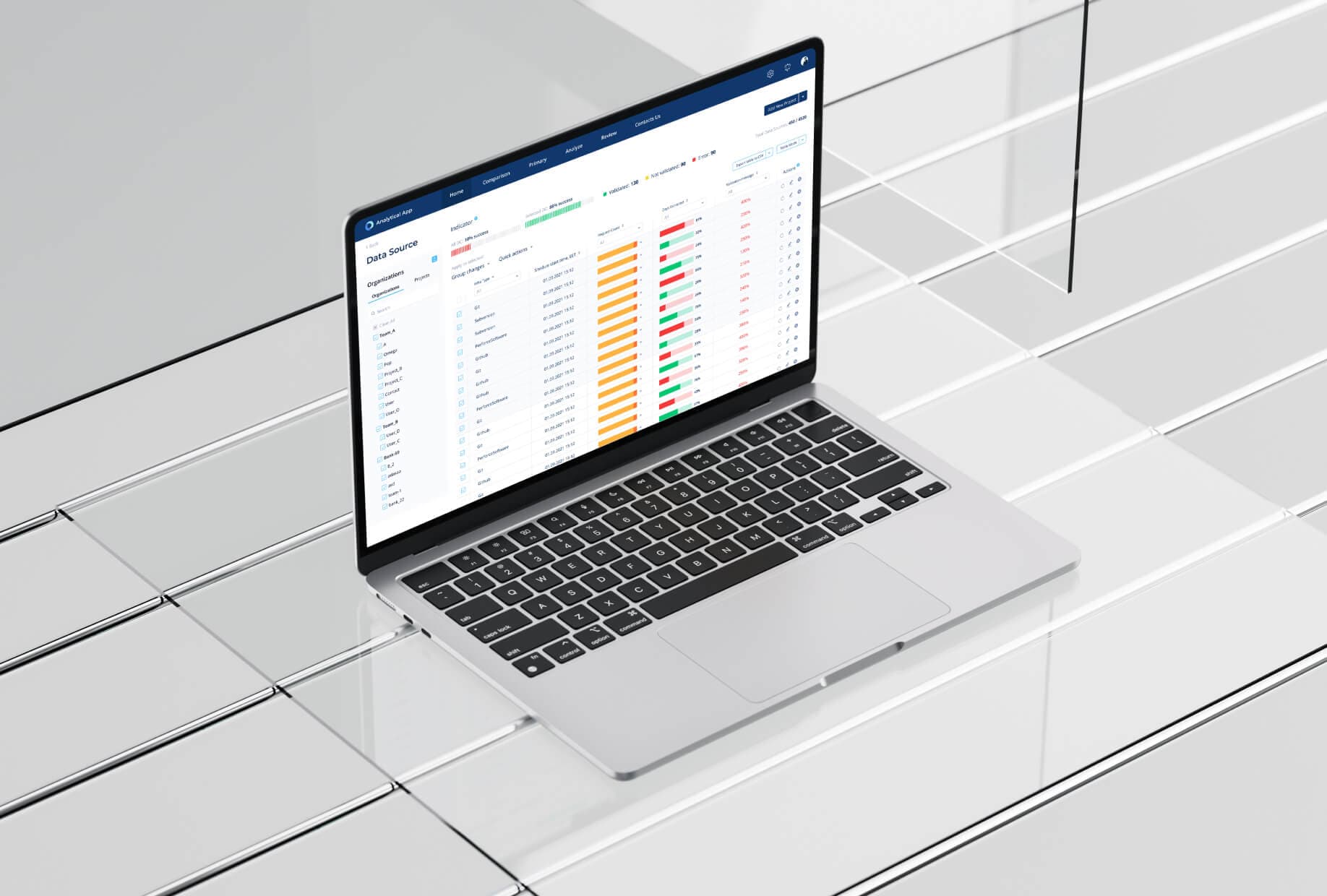
The application displayed very long lists containing hundreds of thousands of formatted elements and controls. Browser limitations, especially in Internet Explorer 10 (which had to be supported as part of the core requirements) made rendering such large volumes of data unstable. Even modern browsers struggled with performance and often crashed when processing that many elements.
Solution
We developed a “virtual scroll” feature that displays only a small portion of elements at a time, dynamically updating them as the user scrolls. The remaining data stays in the browser’s memory and doesn’t affect performance. This approach ensured smooth scrolling, fast response times, and a stable experience even when working with massive data tables.
Highload handling
Problem
The number of elements in the local database grew dramatically – from around 5,000 to over 800,000. Managing such a massive dataset, organized in a complex graph structure on the front end, created significant performance challenges. The system required new technical solutions to maintain stability and responsiveness under this increased load.
Solution
We analyzed and optimized the key operations for working with the local database. The workflow was updated to make better use of built-in indexing tools, and custom indexes were introduced where necessary. We also improved sorting and filtering methods, refined the database structure, and optimized RAM usage. These changes ensured consistent performance and stable system operation, even with large-scale data.
Outcomes
Our collaboration helped the client efficiently scale their enterprise analytics platform and enhance overall system performance. The system now efficiently handles significantly larger datasets, delivers high UI performance, and provides a smoother experience for end users.
The application achieved exceptional UI performance and stability. The redesigned architecture delivered a response time of under 200 ms per operation through a simple, stateless REST API. The platform now operates reliably with a tenfold increase in local database size and thousands of interconnected elements in a graph structure.
Building on this foundation, we continued supporting the client with new initiatives – including an Admin Control Panel and advanced analytics modules – further expanding the product’s capabilities.
We helped the client efficiently scale their enterprise analytics platform and enhance overall system performance.
Case studiesView all
 Calculate Project Cost