Data Integration for a Leading Energy & Mobility Company
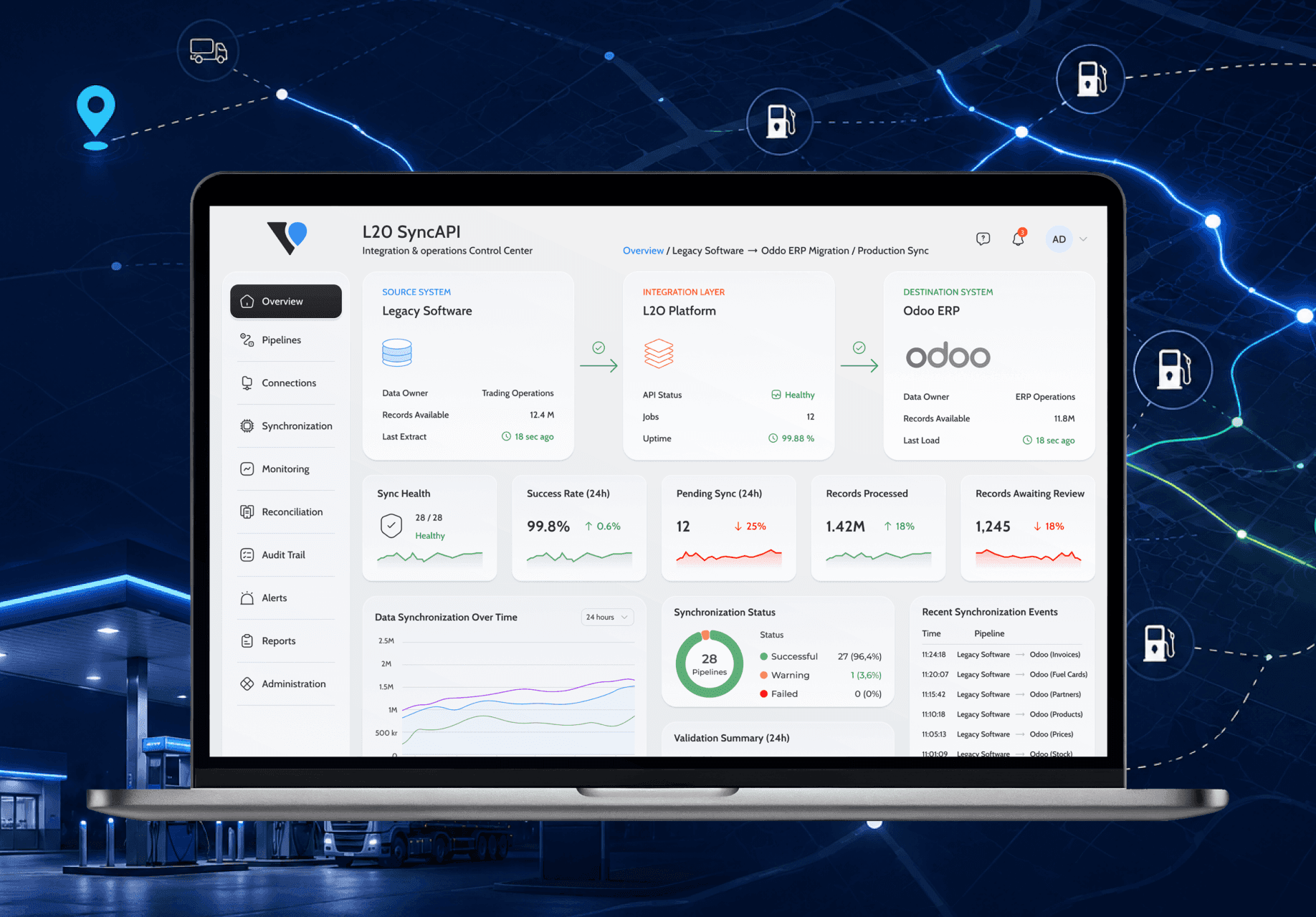
We developed a mission-critical integration platform that ensured secure, auditable, and high-performance data exchange between core enterprise systems.
About the client
Content
- 01Challenges
- 02Our Solutions
- 03Value Delivered

Challenges
Ensuring accurate and secure transfer of large volumes of operational and transactional data from legacy software to Odoo
Maintaining business continuity during the ERP rollout, with no disruption to day-to-day operations
Supporting a phased migration approach, allowing legacy and new systems to run in parallel
Reducing manual effort required to monitor synchronisation and investigate issues
Implementing robust audit trails and access controls to meet enterprise governance requirements
Providing full visibility into the synchronisation process, including data validation and discrepancy analysis
Handling high-volume data transfers efficiently, with some synchronisation jobs processing hundreds of thousands of records
Our Solutions
- 01Custom C# APIs to orchestrate synchronisation workflows and provide secure access to prepared data;
- 02A dedicated middleware layer that served as a controlled bridge between the legacy and new ERP environments;
- 03Detailed audit logging to capture every synchronisation event and data transfer for full traceability;
- 04A web-based monitoring and analytics portal for tracking synchronisation status, validating data completeness, and investigating discrepancies);
- 05Tools to trigger synchronisation processes on demand or according to a predefined schedule;
- 06Role-based access controls to ensure secure use of synchronisation and monitoring tools;
- 07Performance optimisation to support high-volume data processing, including synchronisation requests involving 300,000+ records;
- 08Automated monitoring and operational controls that reduced reliance on development teams during day-to-day use.
Value Delivered

Value Delivered
The solution provided the client with a secure and transparent way to manage data synchronisation between legacy and modern ERP systems, reducing operational risk and providing both technical and business teams with greater visibility and control throughout the ERP transition.
Key outcomes included:
- Enabled secure and controlled data exchange between a legacy software and Odoo ERP;
- Improved visibility into synchronisation status and data quality;
- Reduced reliance on developers for routine monitoring and issue investigation;
- Strengthened auditability and operational control;
- Supported the client’s phased ERP rollout without interrupting business operations;
- Created a scalable foundation for future process automation and reporting.
We provided the client with a secure and transparent way to manage high-volume data synchronisation between two ERP systems.
Case studiesView all
 Calculate Project Cost